
The Ultimate Guide to Coffee Fermentation
What Are The Processes Of Coffee Fermentation? Coffee Fermentation: Traditional Classics, Experimental Innovations, and the Microbial Magic That Shapes Every…

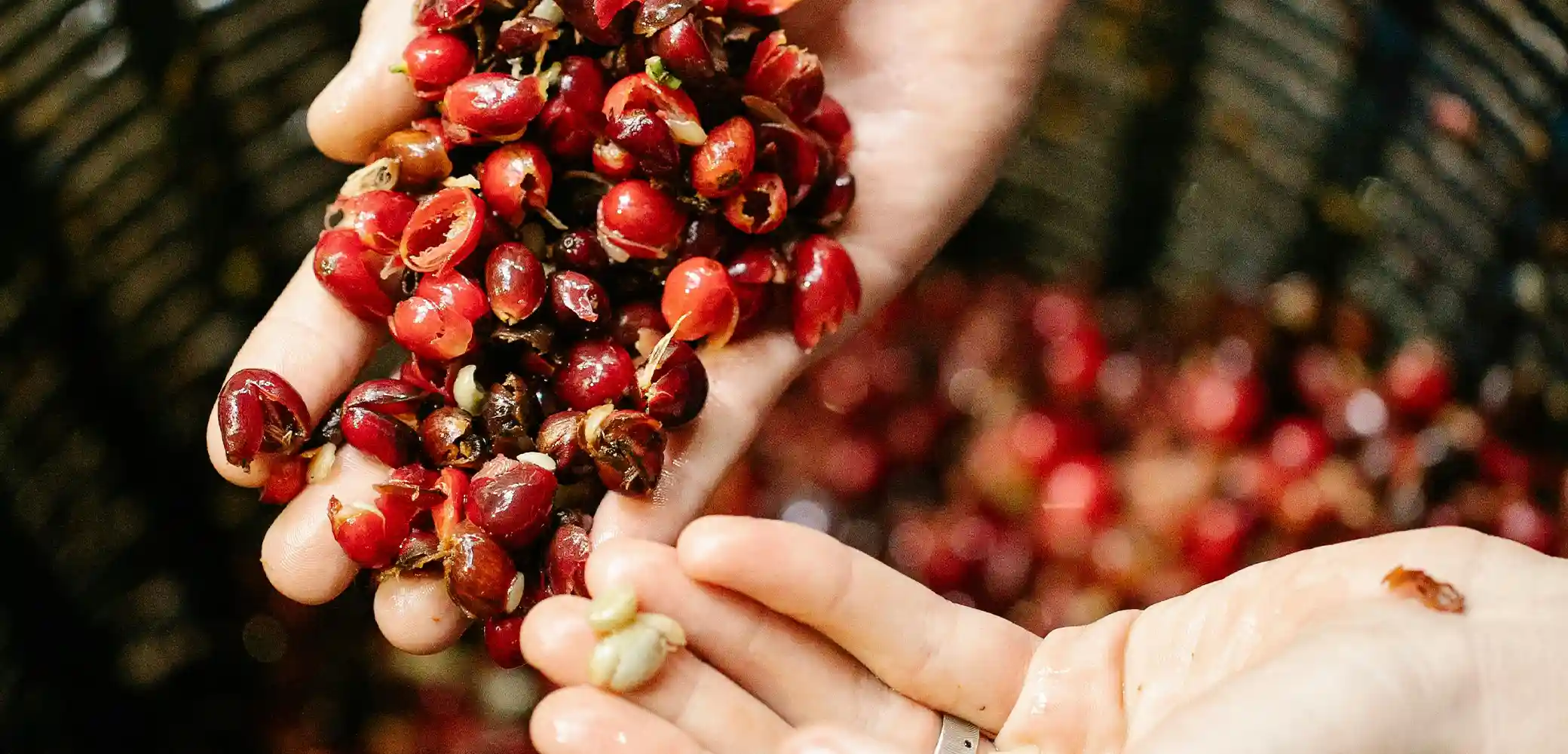
Coffee fermentation is far more than a simple step in processing — it’s the invisible microbial symphony that transforms the sugary mucilage (the sticky, pectin-rich layer surrounding the coffee seed) into the complex acids, alcohols, esters, and aroma precursors that define your brew’s flavour, acidity, body, and aftertaste. Unlike beer or wine, we don’t ferment the bean itself; instead, yeasts, bacteria, and sometimes fungi feast on the fruit’s sugars right after harvest.
This “party” happens in every processing method, but the conditions — oxygen levels, temperature, duration, pH, added microbes, or even external fruits — dictate the outcome. Traditional methods rely on wild microbes and basic setups for clean or fruity profiles. Experimental techniques (exploding since the mid-2010s) give producers precise control, yielding boozy, candy-like, or creamy cups that command premium prices.
In this expanded guide, we’ll cover all major types, how they’re performed, the flavours and characteristics they deliver, where and when they’re used, confusing terminology (many overlap!), the science of microbes, sustainability angles, tasting tips, and what’s coming next. We’ll also include handy comparison tables and visual charts for quick reference.
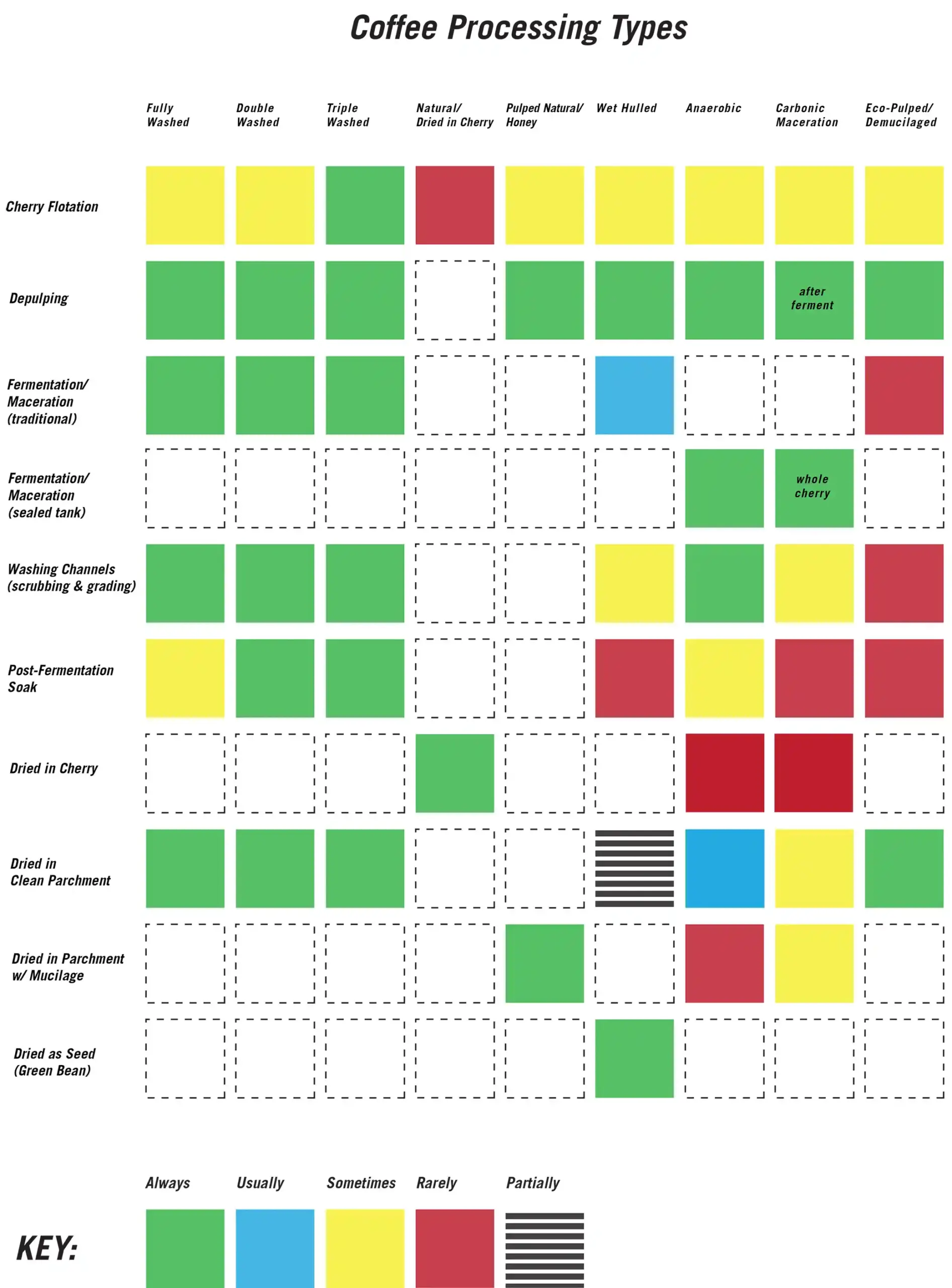
Above: Comprehensive flowchart of coffee processing styles and fermentation stages. Green = always/usually; yellow = sometimes; red = rarely. This visual clarifies how fermentation fits into washed, natural, honey, anaerobic, carbonic maceration, and more.
Fermentation has been part of coffee processing for centuries. Natural (dry) processing — the oldest method — originated in Ethiopia and Yemen, where whole cherries dried slowly under the sun, allowing incidental fermentation. Washed (wet) processing emerged in the 18th–19th centuries in Central/South America for cleaner cups and weather independence.
The real revolution hit around 2015, when Australian barista Saša Šestić won the World Barista Championship with a carbonic maceration coffee. This sparked global experimentation: sealed tanks, CO₂ injection, starter cultures, and fruit co-ferments. Today, these methods dominate speciality microlots in Colombia, Costa Rica, Panama, and beyond, pushing cupping scores into the 90+ range while commanding 2–5× prices.
(Visual timeline concepts often highlight the 2015 WBC pivot as the turning point from traditional to controlled fermentation.)
Key terms explained:
Microbes do the heavy lifting:
Aerobic environments favour faster breakdown and bright clarity. Anaerobic tanks favour LAB and yeasts for layered, winey, tropical profiles. Temperature matters hugely: cooler (~4–15°C) boosts lactic/yeast dominance; warmer (~30–37°C) favours acetic for bolder funk.
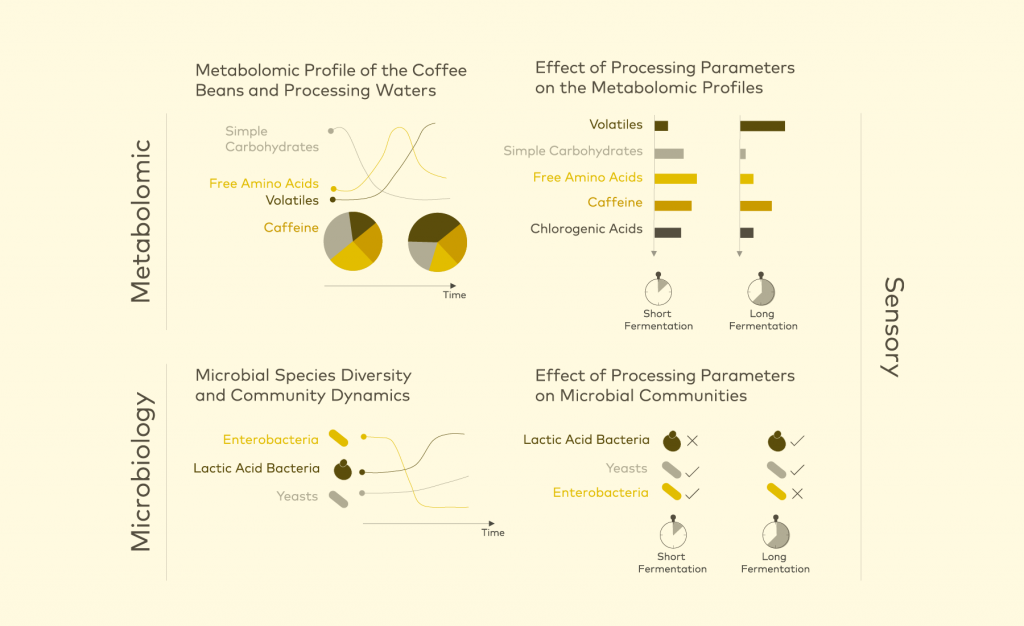
Above: Microbial diversity and metabolomic charts (SCA 25 Magazine). Shows how fermentation duration and conditions shift lactic acid bacteria, yeasts, volatiles, and sensory outcomes.
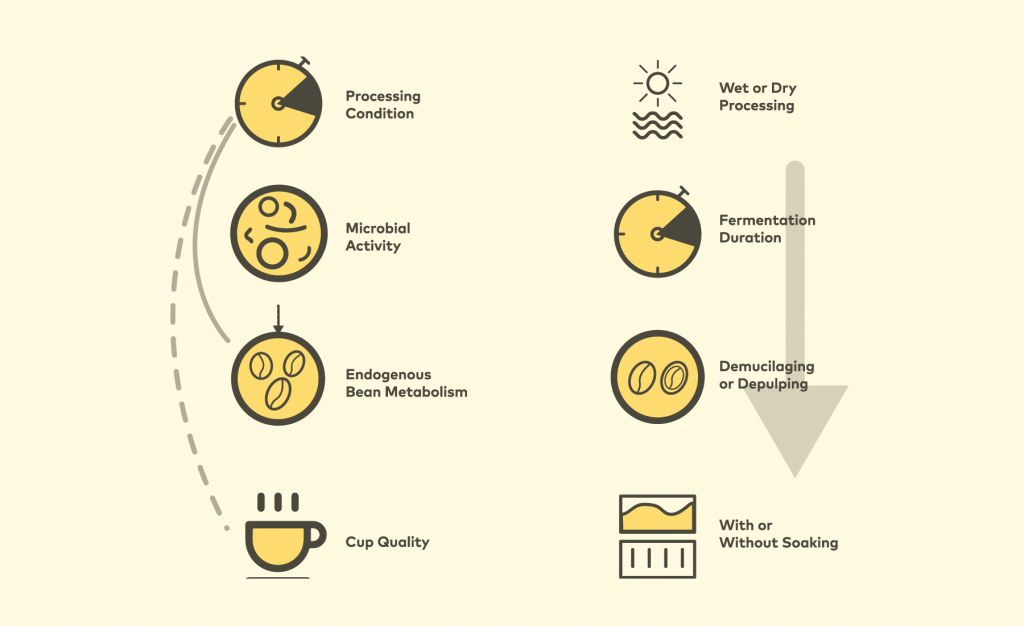
Above: The fermentation effect cycle — processing conditions + microbial activity + bean metabolism = cup quality.
These still make up the majority of global production.
Washed (Wet Process) Whole cherries are depulped, then beans + mucilage ferment in open tanks or underwater (12–72 hours, sometimes with mechanical demucilagers). Rinsed clean and dried. Aerobic-dominant. Characteristics: Bright, crisp acidity; clean, tea-like clarity; floral/citrus/stone fruit. Light-medium body. Where/When: Water-rich areas (Colombia, Kenya, Rwanda, Central America). Dominant since 1800s for consistency. Kenyan Double Fermentation variant: Two stages (~24h + 18–24h) for extra vibrant black tea/floral notes.
Natural (Dry Process) Whole cherries dry intact on patios/raised beds (2–4 weeks or longer in extended versions). Slow internal fermentation. Characteristics: Bold, heavy body; intense ripe fruit, berries, winey/jammy sweetness. Rounded acidity. Where/When: Dry climates (Ethiopia, Brazil, Yemen). Centuries-old; modern controlled drying reduces defects.
Honey (Pulped Natural or Semi-Washed) Depulped but mucilage left on; dried. “Colour” levels indicate mucilage amount and drying style. Characteristics: Syrupy sweetness + balanced fruit/acidity. Bridge between clean and bold. Variants (see chart below):
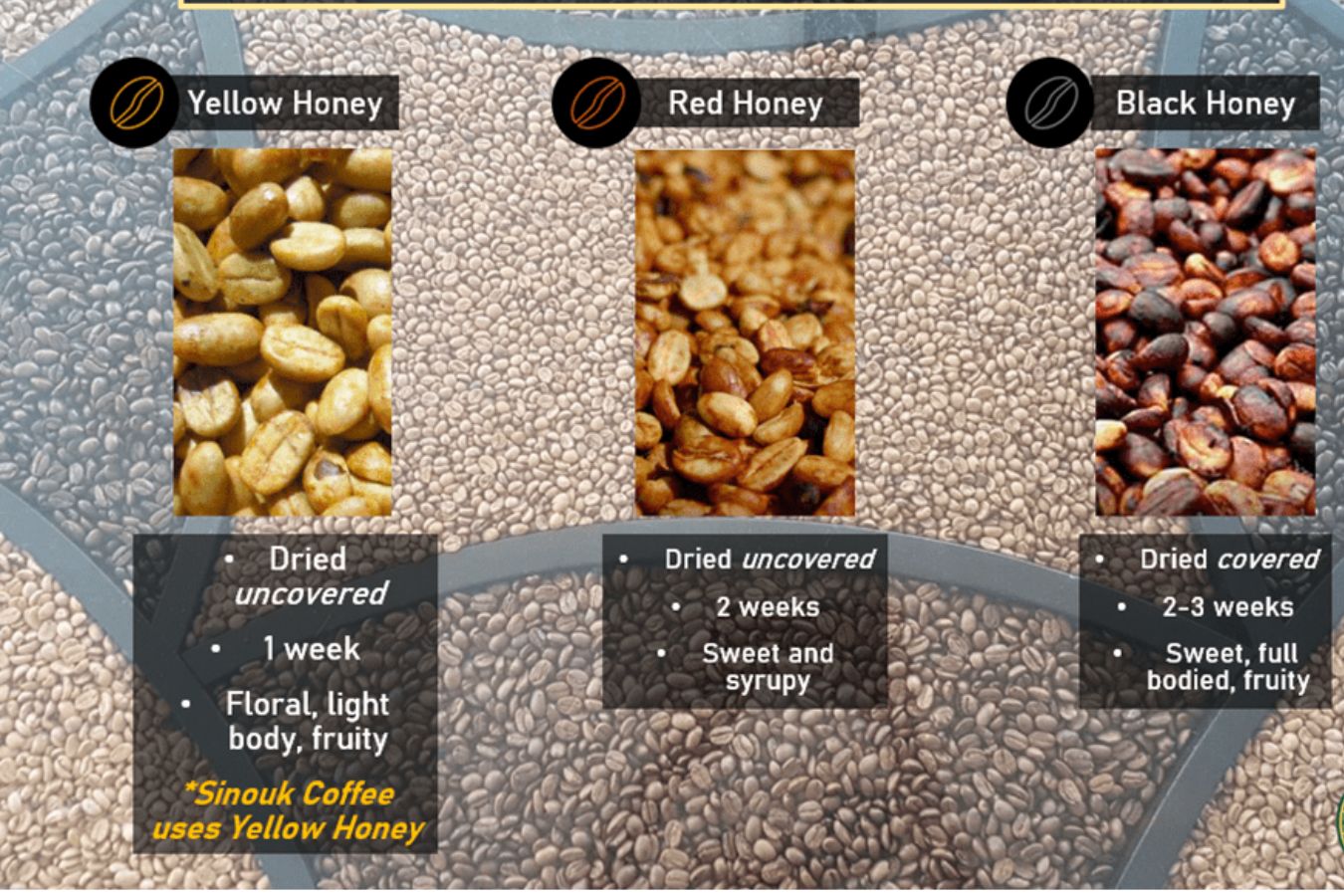
Honey colour variants visual guide (Yellow: light/floral; Red: sweet/syrupy; Black: full-bodied/fruity).
These often combine with traditional drying for hybrid profiles.
Anaerobic (Sealed-Tank or Low-Oxygen) Depulped or whole cherries in airtight tanks (CO₂ builds naturally). 24–96+ hours, monitored pH/temp. Can precede washed, honey, or natural drying. Characteristics: Funky tropical fruit, berries, florals, boozy/winey, enhanced sweetness, creamy body, softer acidity. Sometimes gingerbread or candy notes.
Carbonic Maceration (A specific anaerobic subtype) Whole cherries sealed; CO₂ actively injected for complete anaerobism and pressure. 24–72+ hours, then finished as any base process. Characteristics: Vibrant wine-like (strawberry, grape), juicy, silky, sometimes cinnamon/dairy/yogurt. Key difference from plain anaerobic: Whole-cherry focus + forced CO₂ (from wine’s Beaujolais method). Not interchangeable!
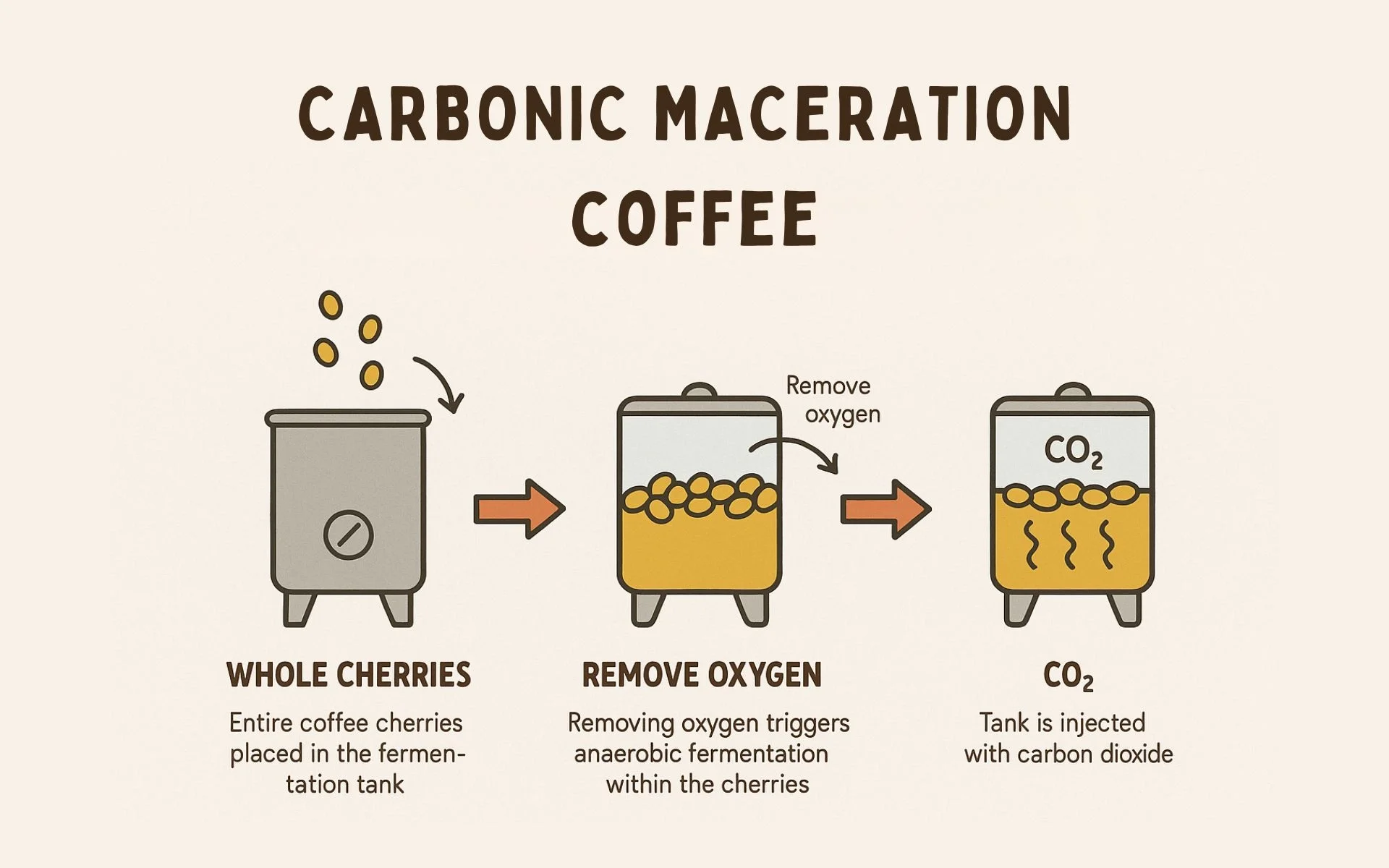
Above: Step-by-step carbonic maceration diagram — whole cherries → oxygen removal → CO₂ injection.
Lactic Fermentation Targeted anaerobic favouring LAB (sometimes with 2–3% salt brine or starter cultures). Often 80+ hours. Pioneered at La Palma y El Tucán (Colombia). Characteristics: Velvety/creamy mouthfeel, yogurt tang, buttery/chocolate, intense sweetness, pineapple-papaya brightness.
Other Cutting-Edge Techniques:
What Are The Processes Of Coffee Fermentation? Coffee Fermentation: Traditional Classics, Experimental Innovations, and the Microbial Magic That Shapes Every…
Tracing the Roots of Coffee and Exploring Where Coffee Come From Where Does Coffee Come From? Few beverages possess the…
Kenya AA Speciality Coffee Beans: Creative Drinkers SCA 87 – Tasting Notes, History & Ultimate Brew Guide Unlocking Kenya’s Liquid…